Solid Carbide Router Cutters for CNC Machining
Prima Tooling supplies solid carbide router tooling for CNC machining of timber, MDF, HDF, plywood, particle board, laminated panels, plastics and other industrial materials.
Solid carbide provides a rigid cutting edge and is well suited to high-speed routing, profiling, trimming, grooving, nesting and finishing applications. The correct cutter geometry, flute arrangement and cutting direction should be selected to suit the material, machine, cutting depth and required finish.
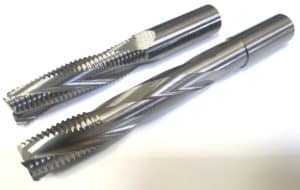
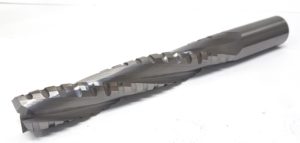
Our solid carbide tooling includes finishing cutters, roughing cutters, chipbreaker tools, ball nose cutters and compression spirals, together with special-purpose tooling manufactured for individual applications.
For a wider choice of PCD, TCT and solid carbide options, see our CNC router cutters range.
Upcut, Downcut and Compression Geometry
The cutting direction of a spiral router cutter has a major effect on chip evacuation and surface finish.
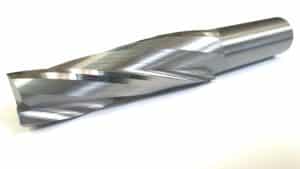
Upcut spiral cutters pull chips upwards through the cut, helping clear material from the cutting area. They are particularly useful for grooving, pocketing and applications requiring efficient chip evacuation.
Downcut spiral cutters direct the cutting force down towards the workpiece. This can help control the upper surface edge when machining timber, veneered boards and laminated panel products.
Compression cutters combine upward and downward cutting action within the same tool. When the compression point is positioned correctly within the board thickness, the cutter can help reduce breakout on both the upper and lower faces of double-sided laminated or veneered panels.
Choosing the Correct Solid Carbide Tool
Tool diameter alone does not determine which cutter will perform best. Flute geometry, number of cutting edges, cutting length, cutting direction, feed rate and spindle speed all need to suit the application.
Where a standard cutter does not provide the required dimensions, finish or performance, Prima Tooling can also manufacture bespoke solid carbide tooling from a drawing, CAD file, existing cutter, component sample or machining requirement.
For more information about the cutting material itself, see our What Is Carbide? guide.
Solid Carbide Tooling Range
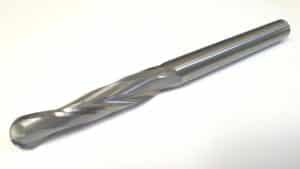
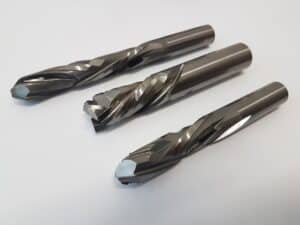
Solid Carbide - Roughing